Wednesday, September 23, 2015

Where is the Love?


By Sarah Mullens
The music video ‘Where is the Love?’ by The Black Eyed Peas was released in 2003. Both the video and the song are about racial and societal conflict in America today. The music touches upon the issues of terrorism, bombing, and discrimination. It also acts as a call for change in the way we are bringing up our youth. Overall, I think the video does a good job of bringing to life the issues discussed in the song and providing a visual for the unseen (and often ignored) strife that occurs daily all over the world.

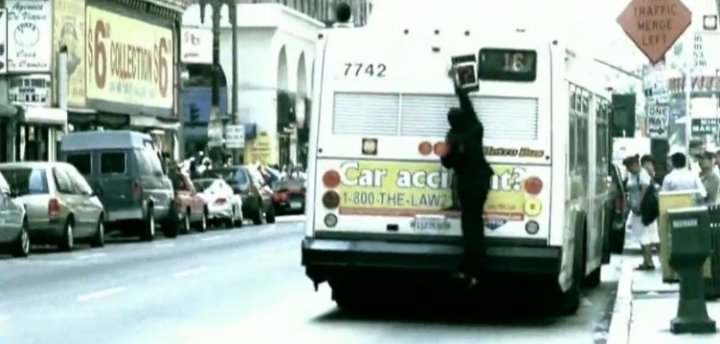
A sign that is seen throughout the video is a question mark. This popular and even universal sign is representative of the theme of the music video and also the title of the song: where is the love? Although a question mark at first seems to be a very vague symbol, as the music video continues it becomes the representation for various questions. It’s seen being placed on a TV screen, covering up a violent video game being played by children. It’s seen being tattooed on people’s arms and in surveillance videos. A black man places it on the back of a bus and is then chased down by the cops. All of these situations that occur were chosen very deliberately and hint at the corruption, discrimination, and terrorism that is occurring today. By placing the fliers/stickers that have question marks in these situations, the band is forcing the viewers to ask themselves why these things are occurring.


Another interesting thing about this video is the way in which the band is presented. They are pictured throughout the video running as if they are being chased, sitting in the back of a black van with a question mark on the side of it, and putting fliers with question marks on them all over a city. The Black Eyed Peas are essentially depicted as fugitives for the duration of this music video, which plays directly into the lyrics: “But if you only have love for your own race/ Then you only leave space to discriminate/ And to discriminate only generates hate”. These lyrics are significant because the Black Eyed Peas themselves are a racially diverse group, and so they understand what discrimination is like from all different perspectives. 

Despite their racial backgrounds they all can agree that there is something wrong with the United States today, and they come together to create a very powerful song regarding these issues. This song begs for love. It questions the morals taught to the youth of today.

Even the way in which the video was filmed seems to be hurried and even spontaneous: The band is seen rapping and performing their song in the back of a van, while they drive around the city and place the question mark fliers everywhere.  Sometimes they are seen running from place to place as if they are being chased. This implies that even while the band tries to speak this message of peace and love, they are still vulnerable to the corruption of America today. The whole video is very candid, just like the message the Black Eyed Peas are trying to convey. There was no editing or special lighting involved in the production of this video. Between shots of the band singing, there are close up shots of children singing along with the lyrics. This creates an emotional aspect of the video that invites one to sympathize with today’s youth. The lighting of the video is also very dull and morbid. There are no bright colors, which makes the tone seem hopeless and pleading.

In the end of the video, it alternates between shots of people of all different races looking up into a light and the band singing, “We only got one world, one world.” These people stop what they are doing and look up at this light, and the colors in the video get brighter. Overall, this video was very effective in conveying the theme of the song (a plea for change) and motivating the public to make a change in their own lives.


Where is the love - Critique #2


By: Alex Cotner


The music video, “Where is the Love” by The Black Eyed Peas is centered on the lack of unison and sense of togetherness that we have as a society. The theme throughout the video is represented by the question marks on the paper that allude to how our country is today, such as the ignorance in society, racism, selfishness, and materialism.  The music video, released in 2003, topping the charts at an astounding 134 million views on youtube, was based off the tragedy of 9/11 which created a hunt for social equality. 

The overall sign of the video was the question marks on the papers. Although vague, the question mark represents the overarching theme of “where is the love?” The crumpled papers with the question marks are planted everywhere in the city such as on the television, cars, signs, and on the windows. Even at a young age we are exposed to violence whether it is walking home from school in an unprivileged area or what is online and available for kids. As it is displayed in the music video, the children are playing a video game that resolves in killing, blood, and death. This music video depicts what we are struggling with as a culture full of poverty and racial discrimination. For example, the African American man places a question mark on the back of the bus and gets chased down by the cops and arrested. I found it captivating that The Black Eyed Peas are a diverse group themselves, but yet can all come together and recognize the issues going on no matter the race or where they came from. Together, they search for someone to make a change, especially from the younger generation. In one scene, the children run together to chase after the black bus that is speeding away. This shows that the kids are the future and that if anyone has a better opportunity to make a change it’s them because they have all the power.       
 The video gives off a very dark grey and depressing tone, like a documentary vintage theme film. The visuals of the shots were edited in very harsh lighting to create a mysterious and darker theme to make the city look lifeless. When the children are mouthing the words on the screen it evokes sympathy for them because they are questioning where the love is as well. The only time that it brightens up is at the end when everyone in the video steps out side and looks up at the light almost as if they are challenging god as to where the love is and praying for a change. Overall, I think that the exposure throughout the video really set the scene. 

Interscope Productions and The Black Eyed Peas created a successful music video that blends the lyrics and visuals together to create a powerful memorable video.

The Black Eyed Peas Challenge Society

By: Kathleen Gillis

 
I was eight years old when my older brother introduced me to the song, “Where is the Love?” by the Black Eyed Peas. Almost immediately, the song impacted my peers and me. The cultural anthem became an instant hit when it was released in 2003. Currently sitting with over 134 million views on YouTube, “Where is the Love?” continues to remain relevant in the younger generation today. Climbing all the way to number eight the U.S. Billboard Top 100 in 2003, “Where is the Love?” has been a catalyst in the discussions about social and cultural issues in the modern world.

The images combined with the influential lyrics create a persuasive argument that captured the attention of a significant amount of the younger audience. The video portrays a strong message and cultural phenomenon with the question mark sign that is the prominent focus throughout the video. In addition, the use of a documentary style and lighting add to the overall feeling and theme the Black Eyed Peas and producer Will.I.Am. were portraying in their video.

The opening shot is a crumpled, question mark poster that is being held by a social activist as he runs through the streets. The question mark then shows up in every shot. They are being thrown on cars, put on windows, stuck on street signs, tattooed, and hung from billboards. The video quickly develops this punctuation into a sign. This sign is put onto everyday objects, serving as a constant reminder. Anyone who sees the question mark is going to likely think, “Where is the love in our society?” The crumpled poster mentioned in the first shot serves as a symbol that love and social equality must prevail even if it is broken down.

It is also important to note how the posters of the question marks are being put up. Social activists are shown sprinting through the streets throwing them up on anything within reach as if it is illegal to be seen putting them up. This is a symbol that it is frowned upon to speak up for change. Often change is resisted in a society, and it can be dangerous to draw attention to the need for it. This is also solidified when Black Eyed Peas member Apl.De.Ap is arrested for putting a flyer on a bus. He then raps about how fairness and equality have given way to animosity. He also urges society to open their eyes, because biased, mainstream media is influencing young minds in a dangerous way. This is an effective way to influence mainstream media by drawing attention to its flaws.


The music video is shot in a documentary style, which adds to the overall tone. The camera is shaky, as if it was by pure chance that the social activists are caught on video. The video also has a blue-gray tone to it. This lighting makes the city of Los Angeles look lifeless. By using this dark lighting, the producers were successful in sending the message that the world will be die without compassion. Society needs to open up their eyes to the pain they are causing. Once the younger generation depicted in the video opened their eyes to the change, the lighting became brighter and warmer.

“Where is the Love?” by the Black Eyed Peas started a cultural movement through their video. They urged the younger generation to stand up for equality and compassion. Many critics have used this sign in different ways to draw attention to a need for change. Bill Scott mentioned in his critique how the video creates a spiritual message. This video successfully used a punctuation mark as a catalyst for change.

Do You Have The Love?

By Hester Lee

Produced by Interscope Records, The Black Eyed Peas' song and video "Where Is The Love?" has garnered much attention for the messages that it portrays. The music video starts out with a prevalent theme of a question mark being posted all over the city. At first, it is hard to tell why the people are posting question marks all around. But as the video progresses, you see images of violence on the television, which would then cut to a picture of the same question mark that shows up throughout the video. There is also an incident where a member of the group posting the tags is arrested, and is explaining his actions (through rap) to the officer. At the end of the video, people from varying ages come outside to stand on the sidewalk while looking up at the sky, as the words "We only got/one world, one world/That's all we got/One world, one world".


This music video portrays many themes that have the audience think about their own selves and the how people are in the world. The first thing that the audience should notice is the setting. The video takes place during the day, where people are all about, driving, walking, and playing outside. Without trying to, the group is running around posting signs of question marks all over the place, showing that though vandalism is illegal, they disregard the rules in order to preach what they believe. Their message: where is the love. Throughout the video, violence is a reoccurring motif that seems to affect everyone in the video, regardless of age. For example, children are playing a game called Postal 2 that caused as much controversy as the first Postal did, as the Postal games are known for the unsolicited violence that the player can inflict on anything the player wants to. The appearance of the game makes as statement against violence when it cuts to a question mark, making the audience question games like Postal, especially when children are playing. The produces invoke a sort of emotion that makes you think of how people like children and adults alike are exposed to the senseless violence, from games to war, and how it becomes a normalized concept of society as we are constantly exposed to it. In a way, not only does the producers point out the senseless violence, but also comments on the lack of action to stop the violence.

A second theme of the music video is the arrest of one of the protesters. He was caught, and taken down very violently, yet is still adamant of spreading his message to even the police that have detained him. His facial expressions show the passion of his message, as he is also raps/tells the officer his angst and reason of why he did what he did. In reading the lyrics, you see that he is concerned with children as "Negative images [are] the main criteria/Infecting the young minds faster than bacteria/Kids wanna act like what they see in the cinema.../whatever happened to the values of humanity" and so-on. The commentary is also reflected by the images of various children from all ethnic backgrounds, making you feel a sense of sadness with the words "where is the love" in the background.

The whole music video is very well put together in the sense that it invokes a strong emotion that makes the audience really question the morality and unity of issues like the broadcasting/invention of violence that people are exposed to everyday. Rather than showing the audience explicit violence, it shows us a way to fix it by not going along with the violence, but protesting it by coming together and supporting each other.

Moral of the video: make love, not war.

One Love - Greg Labbé

           Many artists and bands around the world write successful love songs about relationships. The Black Eyed Peas released, Where is the Love, their own version of a “love song” in 2003. The Peas’ song was different from the normal love song, but it reached the top ten charts in the U.S. regardless of its unique lyrics and video. The music video is also popular with over 100 million views on YouTube. The video is well known because it makes people question normal, everyday aspects of life, advertising shown in the media.
The most prominent symbol in the music video is a “?” mark. The question mark is supposed to ask the question “Where is the Love”, which is asked many times in the chorus and sung by children in the video. The video uses children to sing the chorus because children are the victims of the reason why the question is being asked in the first place. The Black Eyed Peas wrote the song to point out all of the negative things in today’s society, including racism, negative media, death, war, and even lies generated by our own government. The video shows that all of these negative things in the world are affecting our children, the next generation.
You might wonder why the children in the video don’t post the question marks like the adult do in the video. The reason is because the children are not responsible for posting the question marks because they are innocent. The children are not the reason for the lack of love in today’s society. The question mark in the video is advertising. The video uses the question mark as positive publicity as opposed to societies negative publicity. It shows that to change our adults in society we must depict a more positive view on life and implement love as that positivity. It is up to the adults to understand how their actions are influencing their own children.
            A change in publicity will ultimately influence children and will change our society. This is the message the video attempts to leave us with.  The lyrics might leave you thinking that that terrorism and racism are bad but in order to fully grasp the Black Eyed Peas’ message it is most necessary to watch the music video while you listen to the song. The music video is very powerful and shows deep meaning without lyrics. The imagery of the video leaves the viewer pondering negative media and without the lyrics, questioning what the children have to do with any of what the Black Eyed Peas are trying to tell us. The lyrics aid in their message and fully allow listeners to understand why the children are asking, “where is the love”? The problems in society are the reason why the children ask the question. The adults posting the question marks around the city are the activists hoping their children never have to ask the sad question, “where is the love”?


Where is the Love? MVC 2

by Cameron Hayes

“Where is the Love” by the Black Eyed Peas is an indictment of American Society today. The music video is a fast paced portrayal of many things that happen in society, with people posting question marks all over the city, and very dramatic camera cuts that make it feel very fast paced. This is contrasted during the chorus when they show people's faces looking at the camera singing, giving it a slow paced feel. The indictment of American Society is seen while listening to the song, but becomes even more evident after watching the music video. After watching this music video, it really does make me ask the question, Where is the Love? This video exposes the irony that in a nation seen as such a Christian nation, we have kids starving and discrimination all around.
In the music video, there are many examples of all of the bad things going on in this nation. In the lyrics there are such things as “Nations droppin bombs, Chemical gasses fillin lungs of little ones. With ongoin sufferin as the youth die young” and “People killin, people dyin, Children hurt and you hear them cryin”. From the video there are many examples of this as well. From a black man running from the cops, (Which represents racism and inequality in America) to a drug deal going on (Which represents the moral decay of America), this video is full of examples of how bad America has gotten. This is brought into perspective when you understand America in context today. America today is thought of as a very Christian nation. This really exposes the dichotomy between us being a
Christian nation, and all of the bad things that are happening in our country. If you look at the bible, many of the things shown in the video are against what it says. For example, the bible does not condone the drug deal going on in the video. The answer? The Black Eyed Peas want people to start “Practicing what they preach” as they say in the song. In the lyrics, this is shown in lyrics such
as “Father, Father, Father help us, Send some guidance from above” and “Gotta keep my faith alive til love is found, Now ask yourself, Where is the love?”. This is evidenced in the music video when the preacher is holding the bible up to the sky. This bible is special because it has a question mark on it. Which in this music video, really represents the question, “where is the love?”. He is screaming at the sky holding it, and the music video is saying that, he is asking God where the love is, asking the question about how such a Christian Nation could be so messed up.

The Black Eyed Peas did a very good job exposing the irony that America is a Christian nation, but does not follow traditional Christian values. The way that they used the music video to support their lyrics really makes the music video impactful. However, the most important part was that, even though they exposed the bad parts about American society, they also gave the answer to fix it: Love.

Searching For the Love

By Tristan Ashton

In 2003, the American hip-hop group known as the Black Eyed Peas released the single “Where Is The Love?” to instant, widespread, and persistent critical acclaim. Debuting at number 9 on the Hot 100, it catapulted the Peas to commercial and cultural success and reestablished their struggling career. Members will.i.am, Taboo, and apl.de.ap, along with Justin Timberlake, Ron Fair, Printz Board, George Pajon, Jr., and others all co-wrote and produced the song, and are also credited with producing its infamous music video.

The music video in question features the members of the Black Eyed Peas moving around the streets of Los Angeles asking various people “where is the love?” Taboo and will.i.am are shown singing the song inside a van, throwing their voices through speakers mounted on the roof out at people passing by. Fergie, the lone female, delivers the message on foot by placing question marks throughout the city: on top of a Statue of Liberty replica; on road signs and cars; and even handing out flyers of the ubiquitous question mark. Finally, apl.de.ap gets arrested for spreading the same message, and thus becomes a central part of the video. He places a question mark on the back of a bus, but a police officer chases and arrests him, leading him to complain that “instead of spreading love we’re spreading animosity/Lack of understanding leading lives away from unity”.
apl.de.ap appealing to the police
Interestingly, the significance of this part of the video becomes most relevant, not in 2003, but a decade later. In light of the recent rash of police violence over the past few years, apl.de.ap’s arrest for asking the hard questions becomes ever more poignant. Where does the line between peacekeeping and persecution fall? Does apl.de.ap’s nonviolent but illegal protest warrant police action?


It is important also to address a brief clip near the middle, where some kids are shown playing a war game while Taboo laments about “nations droppin’ bombs/Chemical gasses fillin’ lungs of little ones/With ongoing sufferin’, as the youth die young”. Clearly, the lyrical overlay is intended to highlight a depressingly ironic situation: while some children play at packaged war, other children experience the genuine article. Both groups will grow up with war, but with entirely different
War games
perspectives. This dichotomy points to the trivialization of the struggles of others in the minds of the privileged, and is exactly the point of asking, “where is the love?”


The Peas hit on major commercial success with the release of “Where Is The Love?” The culturally aware and thought-provoking lyrics highlight many of the prevalent issues in modern society, such as racism, gang violence, war, and general intolerance. The Peas then complemented their song with an equally thought-provoking music video, featuring the distribution of a red question mark all around Los Angeles. “Where is the love?” they ask us. Well, that answer is up to you.